
Quick answer: Slips, trips and falls are among the most common causes of workplace injuries in Ontario. In 2018, falls accounted for 20.6% of allowed WSIB lost-time claims (13,368 claims), the third-highest injury event, and falls from the same level were the leading injury claim for workers over 45. Slip, trip and fall prevention in the workplace comes down to good housekeeping, prompt spill and snow cleanup, safe walkways, proper lighting, suitable footwear, and fall protection when working at heights.
A wet floor, a trailing cable, an icy parking lot, an unsecured ladder: these hazards are so ordinary that it’s easy to overlook them. Yet slips, trips and falls injure thousands of Ontario workers every year, and falls from heights are one of the leading causes of workplace deaths, especially in construction.
This guide explains the causes of slips, trips and falls, what Ontario law requires, and the practical steps employers, workers and Joint Health and Safety Committees (JHSCs) can take to prevent them.
Key takeaways: slip, trip and fall prevention in the workplace
- 1 in 5 lost-time claims: falls were 20.6% of allowed WSIB lost-time claims in 2018.
- Older workers at higher risk: falls from the same level were the leading injury claim for workers over 45 (2014 to 2018).
- Falls from heights are deadly: 16 fall fatalities in Ontario construction in 2018, 64% of the sector’s Ministry-covered fatalities.
- Most are preventable: housekeeping, spill and snow control, lighting, footwear and guardrails.
- Working at heights: construction workers who may use fall protection must complete approved training.
- The JHSC’s role: inspect for fall hazards and recommend controls.
How common are slips, trips and falls in Ontario?
| Statistic | Figure |
|---|---|
| Share of allowed WSIB lost-time claims due to falls (2018) | 20.6% (13,368 claims), the third-highest injury event |
| Leading injury claim for workers over 45 (2014–2018) | Falls from the same level |
| Fall fatalities in Ontario construction (2018) | 16, or 64% of the sector’s Ministry-covered fatalities |
| Fall fatalities in Ontario industrial workplaces (2018) | 7, or 26% of Ministry-covered fatalities |
Source: Ontario Ministry of Labour, slips, trips and falls inspection blitz results (2019), citing WSIB data.
Each of those injuries also carries real costs for the employer, from lost time and WSIB premiums to replacement staff and lower productivity. See the cost of workplace injuries for a breakdown and a calculator.
What’s the difference between a slip, a trip and a fall?
| Type | What happens | Common causes |
|---|---|---|
| Slip | Too little friction between foot and floor | Wet, oily or icy surfaces; loose mats; wrong footwear |
| Trip | The foot hits an object or uneven surface | Cables, clutter, uneven flooring, poor lighting |
| Fall from the same level | Losing balance on a walking surface | Usually the result of a slip or trip |
| Fall from height | Falling to a lower level | Ladders, stairs, platforms, vehicles, roofs, unguarded edges |
What causes slips, trips and falls at work?
The Government of Ontario lists these common causes of workplace fall hazards:
- Greasy, oily or wet surfaces and spills
- Snow and ice
- Changes in walkway levels or slopes
- Loose or unsecured mats
- Debris, cords or cables in walkways
- Poor lighting
- Smoke, steam or dust that blocks the view
- Unsafe use of ladders
- Falls from truck beds, trailers or loads
- Missing guardrails on mezzanines and balconies
- Unsuitable footwear
- Poorly maintained ladders or fall arrest equipment
What does Ontario law require?
Under the Occupational Health and Safety Act (OHSA), employers must take every precaution reasonable in the circumstances to protect workers, including from slip, trip and fall hazards, and must provide information, instruction and supervision. Supervisors must advise workers of hazards they know about. Workers must report hazards to their employer or supervisor and use the protective equipment the employer requires.
Sector regulations add specific rules. For example:
| Sector | Example requirements |
|---|---|
| Industrial (Reg. 851) | Keep floors and other surfaces free of obstructions and hazards (s. 11); guardrails where workers could fall |
| Construction (O. Reg. 213/91) | Guardrails or other fall protection where a worker could fall more than 3 metres, or in other listed situations such as falling into operating machinery, water or a hazardous substance, or through an opening in a work surface; protective headwear and footwear; safe ladders |
| Health care (O. Reg. 67/93) | Keep work surfaces free of slip and fall hazards (s. 33); safe ladders |
| Construction training (O. Reg. 297/13) | Workers who may use a fall protection system on construction projects must complete working at heights training from a CPO-approved provider |
Enforcement is real. In the Ministry’s 2019 slips, trips and falls blitz, inspectors visited 4,670 workplaces and issued 14,301 orders and requirements, including 899 stop-work orders. Common orders included missing protective headwear and footwear, missing guardrails or fall protection, non-compliant ladders and obstructed floors. A more recent Ministry campaign focused on health and community care (April 2024 to March 2025) led to 2,365 orders and requirements across 939 workplaces.
How to prevent slips, trips and falls
Use the hierarchy of controls, starting with the most effective measures: remove the hazard or change the workplace first, then add procedures, and rely on protective equipment last.
Engineering controls
- Slip-resistant flooring and mats
- Ramps and handrails where levels change
- Better drainage and lighting
- Guardrails and covers for openings
- Cord covers or cable management
Administrative controls
- Wet floor signs and cleaning schedules
- Safe work procedures for ladders and heights
- Training on hazards and safe practices, such as our slips, trips and falls e-learning course
- A simple way to report hazards, and prompt fixes
Good work practices
- Clean up spills right away
- Clear snow, ice and clutter
- Keep walkways and stairs free of objects
- Use three points of contact on ladders
- Don’t carry loads that block your view
Personal protective equipment
- Footwear chosen for the task and surface
- Fall protection equipment that is properly selected, inspected and maintained
For a full approach to finding hazards across your workplace, see how to identify workplace hazards.
Winter slip and fall risks
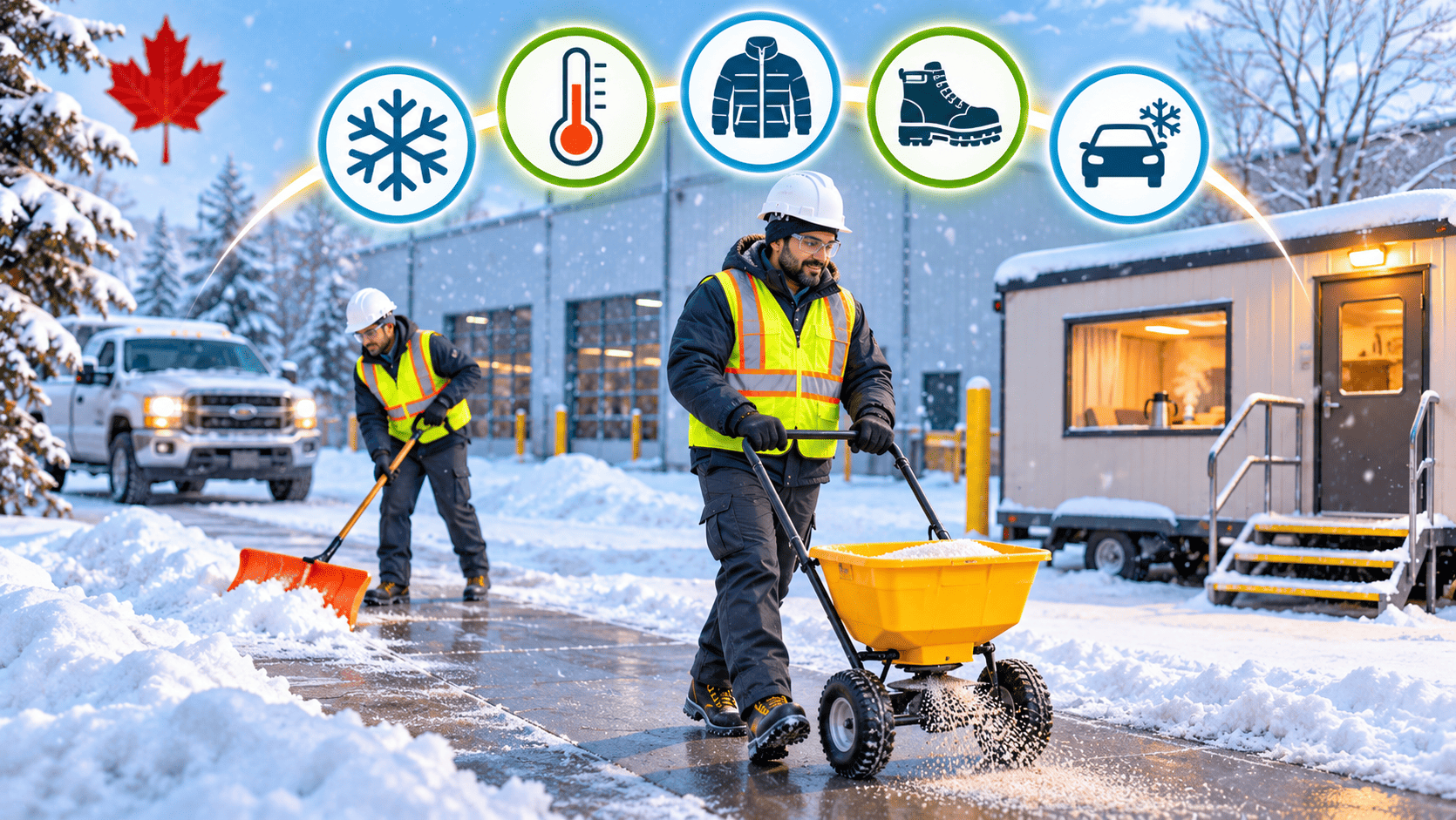
In Ontario, winter brings extra risk at entrances, parking lots and loading docks. For cold stress, snow clearing, winter driving and heater safety too, see our winter workplace safety tips. The basics for slips and falls:
- Salt or sand walkways early and often
- Use absorbent mats at entrances and replace them when they’re soaked
- Clear snow from routes workers actually use, including shortcuts
- Encourage winter footwear with good tread, or ice cleats outdoors
- Light parking lots and outdoor paths well
Slips, trips and falls checklist
Use this quick checklist during walk-throughs and JHSC inspections:
- ☐ Floors clean, dry and free of spills
- ☐ Walkways, aisles and stairs clear of clutter and cables
- ☐ Mats secured and in good condition
- ☐ Handrails on stairs and ramps, in good repair
- ☐ Lighting adequate in all work areas, stairs and outdoor paths
- ☐ Wet floor signs available and used
- ☐ Snow and ice removal plan in place
- ☐ Ladders inspected and used correctly
- ☐ Guardrails at open edges, mezzanines and platforms
- ☐ Fall protection inspected and workers trained
- ☐ Footwear suitable for the work
- ☐ Hazard reporting process known to all workers
Download the slips, trips and falls checklist (PDF)
Get a printable, two-page version with tick boxes grouped by area (floors and walkways, stairs and elevated areas, lighting, winter and outdoor areas, ladders and heights, footwear, and reporting), plus a log to record each hazard, the action needed, who owns it and when it’s done. Use it during monthly JHSC inspections and before winter.
The JHSC’s role in preventing falls
The Joint Health and Safety Committee is well placed to tackle slips, trips and falls:
- Include fall hazards in every JHSC workplace inspection, especially entrances, stairs, loading docks and outdoor areas
- Review incidents and near-miss reporting for slips and trips, which often repeat in the same spots
- Recommend controls in writing, such as better lighting, anti-slip flooring or a winter maintenance plan
- Check training, including working at heights training for construction workers who may use fall protection
- Track trends by season, location and task
Frequently asked questions
Are slips, trips and falls the leading cause of workplace injuries in Ontario?
They’re one of the leading causes. In 2018, falls accounted for 20.6% of allowed WSIB lost-time claims, the third-highest injury event, and falls from the same level were the leading injury claim for workers over 45. Musculoskeletal disorders (MSDs) are the top type of lost-time injury in Ontario.
What are the most common causes of slips, trips and falls?
Wet or oily floors, snow and ice, clutter and cables in walkways, uneven surfaces, loose mats, poor lighting, unsafe ladder use, missing guardrails and unsuitable footwear.
How can employers prevent slips, trips and falls?
Use slip-resistant flooring, good lighting, handrails and guardrails; keep walkways clear; clean spills and clear snow promptly; train workers; and require suitable footwear and fall protection where needed.
When is fall protection required in Ontario?
On construction projects, guardrails or other fall protection are required where a worker could fall more than 3 metres, and in other situations listed in the regulation, such as falling into operating machinery, water or a hazardous substance, or through an opening in a work surface. Other sectors have their own requirements.
Do workers need working at heights training in Ontario?
Yes, on construction projects. Workers who may use a fall protection system must complete working at heights training from a provider approved by Ontario’s Chief Prevention Officer.
What role does the JHSC play in fall prevention?
The JHSC inspects for fall hazards, reviews slip, trip and fall incidents and near misses, and makes written recommendations to the employer.
Conclusion
Slips, trips and falls are some of the most common and most preventable workplace injuries in Ontario. Good housekeeping, prompt cleanup, safe walkways, good lighting, the right footwear, and proper fall protection at heights can prevent most of them. A committee that inspects for these hazards every month and acts on what it finds makes a real difference.
Give your committee the skills to spot and control fall hazards with CPO-approved JHSC certification training, available online, virtually or on-site.
About the author
Sobi Ragunathan is Vice President of Operations, Strategy & Partnerships at 4S Consulting Services Inc. Sobi supports Ontario employers with workplace health and safety, COR®, ISO 45001, WSIB Health and Safety Excellence program implementation, and JHSC certification training.
This article provides general information about Ontario’s OHSA and its regulations and is not legal advice.
Sources
- Government of Ontario, Inspection blitz results: Slips, trips and falls
- Government of Ontario, Preventing slips, trips, and falls in the workplace
- Government of Ontario, Compliance campaign results: slips, trips and falls prevention (health care, 2024–2025)
- O. Reg. 213/91, Construction Projects (ss. 26 to 26.9)
- O. Reg. 297/13, Occupational Health and Safety Awareness and Training
- Occupational Health and Safety Act, R.S.O. 1990, c. O.1