Practical guidance, seasonal insights, and trusted resources to help municipalities protect workers throughout the summer.

Hydration in Outdoor and Non-Climate-Controlled Workplaces
Helping Municipal Crews Stay Hydrated During Hot Weather
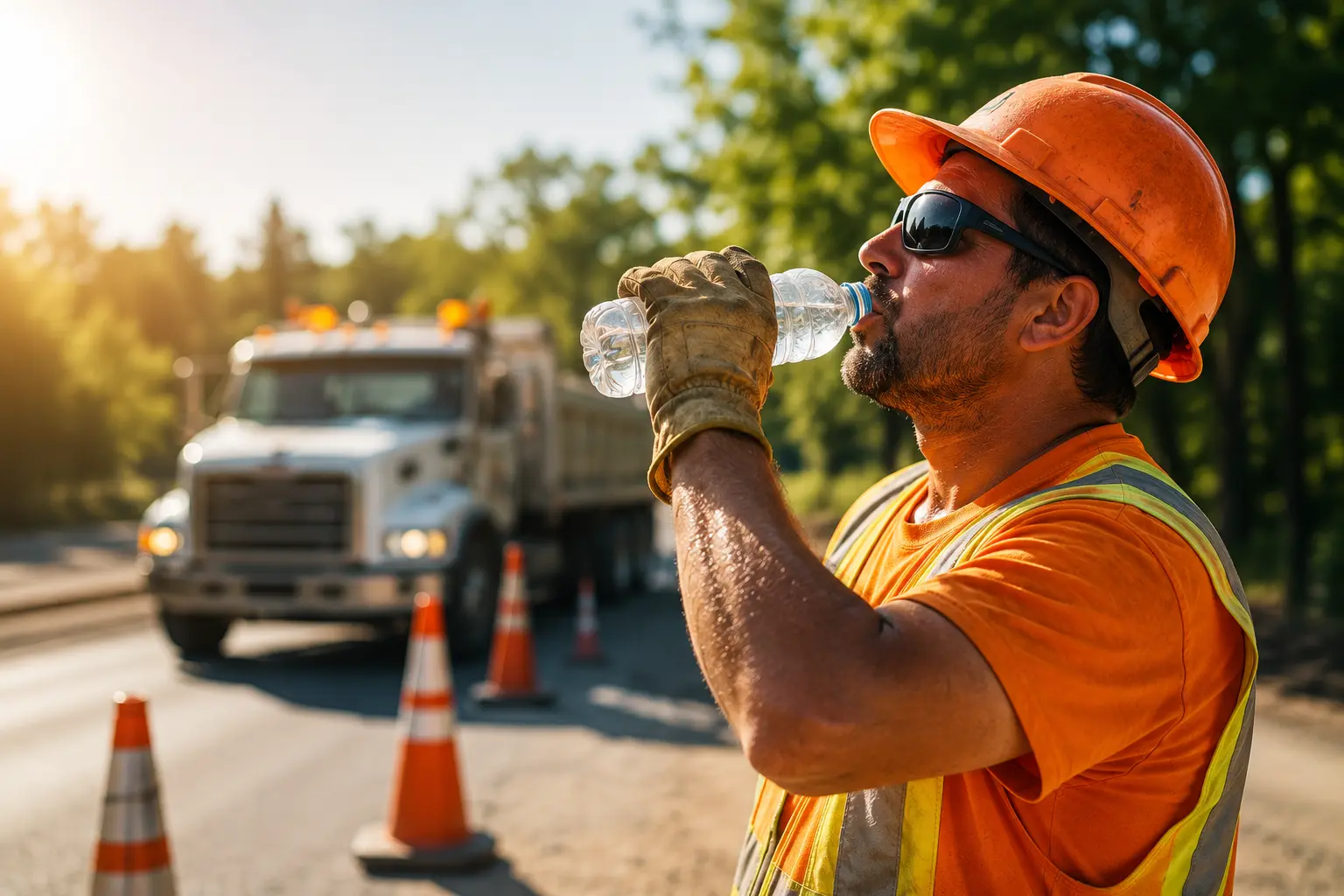
For municipal employees working outdoors and non-climate-controlled environments, hydration is one of the simplest and most important ways to help reduce the risk of heat-related illness.
Road maintenance, parks and recreation, summer camps, waste collection, utilities, public works, forestry, and recreation crews may spend hours completing physically demanding work in direct sunlight, high humidity, and protective clothing. These conditions increase sweating and fluid loss, making consistent access to drinking water essential.
The Canadian Centre for Occupational Health and Safety (CCOHS) recommends providing cool drinking water close to the work area and encouraging workers to drink regularly, rather than waiting until they feel thirsty.
Why Hydration Matters
Sweating is one of the body’s main ways of releasing heat. However, sweating also causes the body to lose water and salts.
When those fluids are not replaced, workers may experience dehydration, which can affect concentration, physical performance, coordination, and the body’s ability to cool itself. Continued fluid loss can also contribute to heat exhaustion and other heat-related illnesses.
The Ontario Ministry of Labour recommends providing cool drinking water near workers and reminding them to drink a cup of water at least every 15 to 20 minutes during hot work.

4S Insight
Hydration should be treated as a workplace control, not left entirely to individual workers or the employer, but as a joint effort. Municipalities can support healthier hydration habits by providing and/or identifying accessible water, refill locations, scheduling recovery breaks, and discussing hydration during pre-shift meetings.
Recognizing the Signs of Dehydration
Recognizing possible dehydration early can help workers and supervisors prevent more serious heat-related illnesses.
Common signs may include:
- Thirst or dry mouth
- Headache
- Fatigue or unusual weakness
- Dizziness
- Muscle cramps
- Dark or concentrated urine
- Reduced urination
- Difficulty concentrating
- Cognitive impact
CCOHS notes that urine generally appears clear to light yellow. Darker or more concentrated urine may indicate that more fluids are needed. However, urine colour can also be affected by medications, supplements, certain foods, and some health conditions.
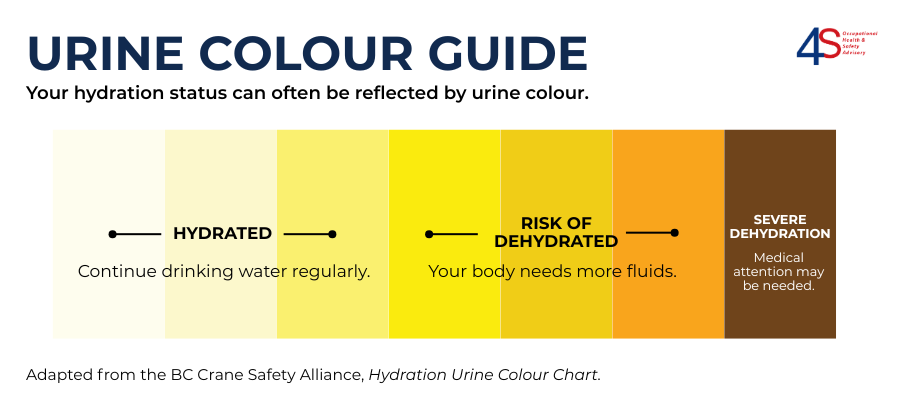
Disclaimer: Urine colour is a general indicator of hydration and is not the sole measure of hydration status. Certain medications, vitamins, foods, and medical conditions may affect urine colour. If you experience symptoms of dehydration or heat-related illness, seek medical attention immediately.
Water Intake Recommendations for Workers
There is no single amount that is right for every worker or every workday.
Fluid needs may change based on:
- Temperature and humidity
- Length and intensity of the task
- Direct sun exposure
- Clothing and PPE
- Individual health
- How heavily a person is sweating
- Access to cooled recovery areas
Water, Electrolyte Drinks, and Other Beverages
For most routine outdoor work, water should be the primary hydration choice.
Health Canada recommends water as the drink of choice because it supports hydration without adding sugar, sodium, or calories.
Electrolyte drinks may sometimes be considered during prolonged, physically demanding work involving heavy sweating. . However, they are not a replacement for water, and their use depends on workplace conditions and appropriate health and safety guidance.
Workers may also be cautious about relying on:
- Energy drinks
- Highly sugary beverages
- Excessive caffeine
- Alcohol
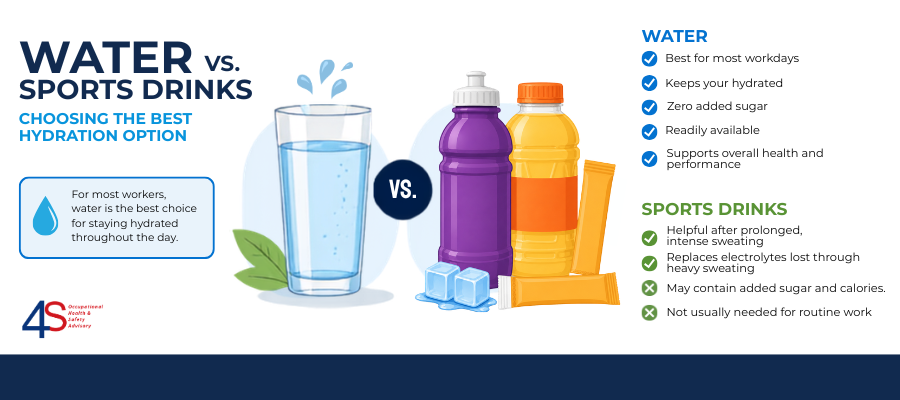
Disclaimer: This graphic provides general hydration guidance only. Individual hydration needs vary based on factors such as workload, environmental conditions, duration of activity, and personal health. Consult a healthcare professional if you have specific medical concerns.
Supplying Water to Remote Municipal Crews
Reliable water access can be more difficult for crews working in parks and recreation, summer camps, trails, roadside locations, forests, cemeteries, or other areas away from municipal facilities.
Before crews leave the yard, supervisors are encouraged to confirm:
- The number of workers and expected shift length
- The amount of drinking water available
- How the water will remain cool
- Where refill locations are located
- When supplies will be replenished
- Whether backup water is available
- How reusable containers and dispensers will be cleaned
- Whether workers can easily access water without leaving the work area for extended periods
4S Insight
A hydration plan is only effective when water is accessible. Placing a cooler in a vehicle may not be enough if the vehicle is far from the crew or water cannot be replenished during the shift. Water access is an important part of job planning and is best addressed before work begins.
Work and Rest Cycles During Hot Weather
Hydration works best when combined with appropriate recovery time and other heat controls.
Ontario guidance recommends increasing the frequency and length of rest breaks, scheduling demanding work during cooler periods, and providing cooled or shaded recovery areas.
Work/rest schedules are based on a range of factors, not temperature alone, including:
- Humidity or humidex
- Physical workload
- Direct sunlight
- Air movement
- Clothing and PPE
- Worker acclimatization
- Radiant heat
- Individual worker factors
The Government of Canada also provides work/rest cycle guidance to help employers and workers reduce the risk of heat stress during physically demanding work in hot environments.
Practical Hydration Tips
Start the Shift Hydrated
Workers benefit from drinking water before physically demanding outdoor work begins.
Drink Regularly
Make water part of the work routine instead of relying only on thirst.
Keep Water Close
Ensure water is accessible near the work area, not only at the yard or main facility.
Use Recovery Breaks
Rest in a shaded or cooled location and replace fluids lost through sweating.
Check for Warning Signs
Pay attention to thirst, headaches, dizziness, fatigue, cramps, and changes in urine colour.
Look Out for Coworkers
A coworker may notice changes in behaviour, balance, or concentration before the affected worker recognizes them.
Report Symptoms Early
Notify a supervisor as soon as symptoms develop rather than trying to work through them.
Hydration Myths and Facts
Fact: Workers should drink regularly during hot work. Thirst should not be the only hydration reminder.
Fact: Smaller amounts consumed regularly are generally more useful than waiting several hours between drinks.
Fact: Health Canada recommends water as the beverage of choice. Some drinks may contain high levels of sugar, caffeine, or sodium.
Fact: Preventing dehydration is a shared responsibility. Employers provide access to safe drinking water and heat stress controls, while workers stay hydrated and report symptoms or concerns promptly.

Build Hydration Into Daily Operations
A strong hydration approach includes more than a verbal reminder to drink water.
Best Practices
- Written heat-stress and hydration procedures
- Pre-shift hydration reminders
- Water-supply planning for remote crews
- Supervisor training
- Worker awareness
- Scheduled recovery opportunities
- Documentation of heat-related concerns
- Emergency and first-aid procedures
- Review of incidents and near misses
4S Insight
The strongest hydration programs are simple, visible, and consistent. When supervisors confirm water supplies, discuss hydration during pre-shift meetings, and monitor workers throughout the day, hydration becomes part of the safety system instead of an individual afterthought.
What’s Next?
This Summer Safety Resource Centre will continue to grow with new seasonal guidance for municipalities.
Upcoming Topics
- Sun Safety & UV Protection
- Air Quality
- Tick Awareness & Outdoor Hazards
How Does Your Municipality Compare?
Every municipality faces unique health and safety challenges, but understanding where your program stands is the first step toward continuous improvement.
Our Municipal Safety Questionnaire is designed to help organizations evaluate key areas of their workplace health and safety program, identify opportunities for improvement, and start meaningful conversations about strengthening safety performance.
By completing the questionnaire, you’ll gain insight into areas such as:
- Health and safety program maturity
- Training and competency management
- Documentation and recordkeeping
- Hazard identification and corrective actions
- Workplace inspections and compliance
- Opportunities for continuous improvement
Whether you’re looking to validate your current processes or identify potential gaps, the questionnaire provides a practical starting point.
Supporting Safer Municipal Workplaces
At 4S Consulting, we partner with municipalities to strengthen health and safety programs through consulting, training, and technology solutions. Our team helps organizations improve compliance, reduce risk, support due diligence, and build more consistent safety practices across departments and locations.
Whether your focus is seasonal hazard planning, employee training, program development, documentation, or overall safety performance, we are here to help you move forward with confidence.
Strengthen Your Health & Safety Program with the WSIB Health & Safety Excellence Program
The WSIB Health & Safety Excellence Program (HSEp) is designed to help Ontario employers improve their occupational health and safety management systems through practical topics, continuous improvement, and measurable outcomes. Participating organizations may also be eligible for WSIB rebates for successfully completing approved health and safety topics.
As an approved HSEp service provider, 4S Consulting works alongside municipalities to help:
- Develop and strengthen health and safety management systems
- Meet HSEp program requirements with confidence
- Implement practical health and safety initiatives
- Improve due diligence and workplace safety performance
- Support continuous improvement across departments
Whether you’re just beginning your HSEp journey or advancing your existing program, our team can help guide you every step of the way.