Practical guidance, seasonal insights, and trusted resources to help municipalities protect workers throughout the summer.
Protecting Outdoor Workers When Air Quality Changes
Protecting Outdoor Workers When Air Quality Changes
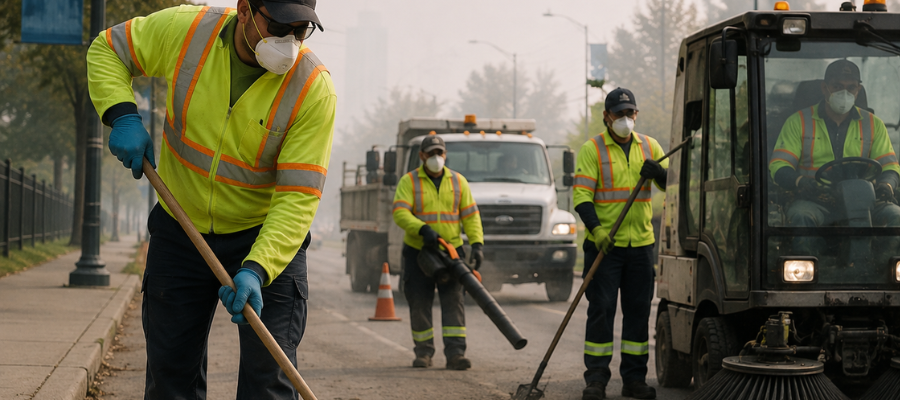
Outdoor work is essential to keeping municipalities running. From maintaining roads and parks to waste collection, inspections and infrastructure work, many employees spend a significant portion of their workday outside.
But the conditions around them can change quickly.
Poor air quality isn’t always visible. Air pollution can come from wildfire smoke, vehicle traffic, industrial activity and other sources. Even when the sky appears clear, pollutants in the air can affect health and make physical demands more challenging.
For municipalities, air quality awareness means more than checking whether smoke is visible. It means understanding changing air quality conditions, knowing how to access and interpret air quality information and having a clear plan to communicate risks and protective measures to employees in the field.
Why Air Quality Matters for Outdoor Workers
Employees who spend extended periods outdoors may experience more frequent exposure to outdoor air pollution simply because of where and how they work.
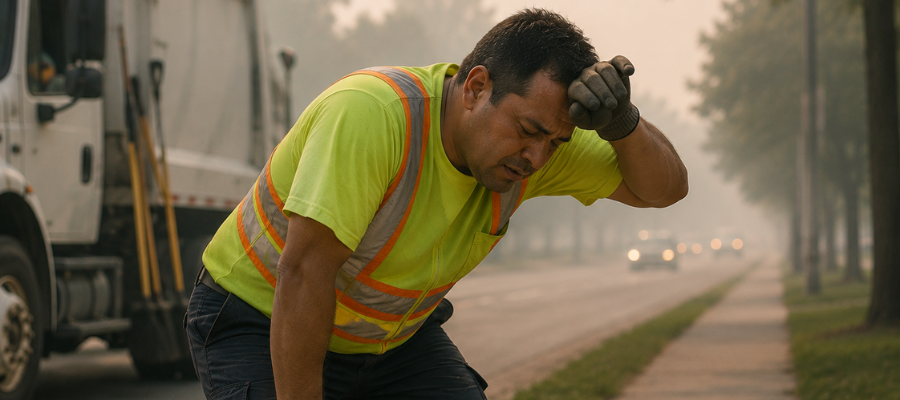
Health Canada identifies people who work outdoors among those who may be at greater risk from outdoor air pollution because of increased exposure. People performing strenuous outdoor activity may also be more affected because physical exertion increases the amount of air a person breathes.
This makes air quality particularly relevant when employees are performing physically demanding work for extended periods outdoors.
4S Insight: Consider the Work Being Performed
Not every outdoor employee experiences the same level of exposure. Consider how long the employee will be outdoors, how physically demanding the task is and whether the work is taking place near potential sources of pollution, such as busy roadways. A task-based approach can help supervisors determine when additional monitoring, communication or adjustments to work practices may be appropriate.
Understanding Outdoor Air Quality
Outdoor air pollution is a mixture of pollutants from many different sources.
The Air Quality Health Index (AQHI) considers three common pollutants:
Ground-level ozone (O₃)
Ground-level ozone is a component of smog and can contribute to poor air quality.
Fine particulate matter (PM₂.₅)
These extremely small particles can come from several sources. During wildfire smoke events, PM₂.₅ can increase rapidly and represents a significant health concern.
Nitrogen dioxide (NO₂)
Motor vehicle exhaust and fossil-fuel power generation are sources of nitrogen dioxide. Levels may be higher near busy roads and other local sources.
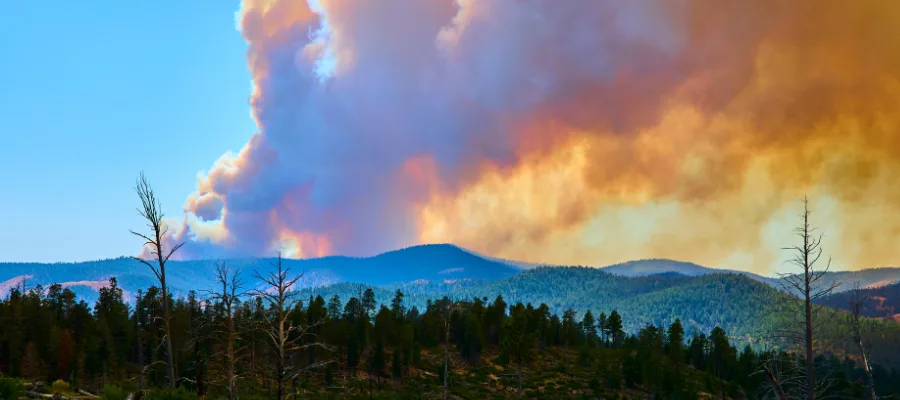
Wildfire smoke is another important consideration. Smoke can travel thousands of kilometres, meaning communities can experience its effects even when they are far from an active wildfire.
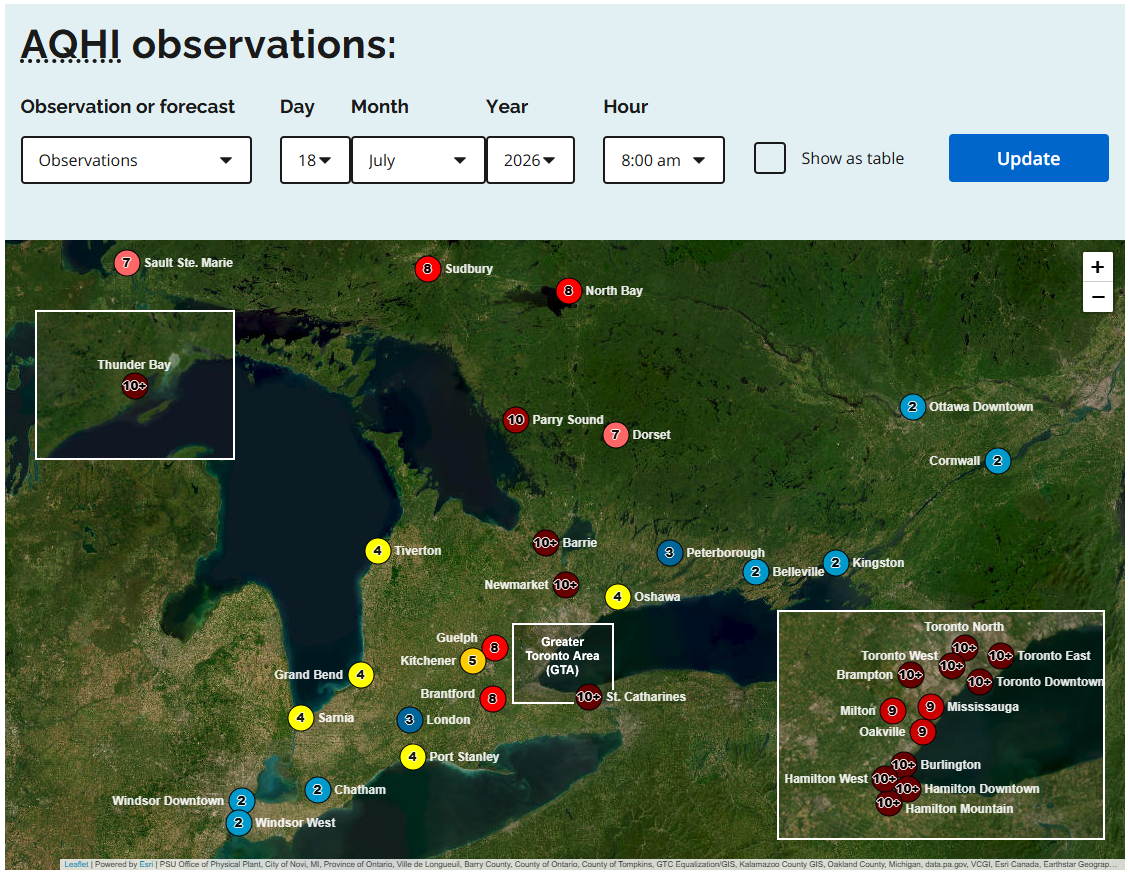
The above map shows the AQHI for one of the worst days for air quality across Ontario in 2026. You can find up to date AQHI Observations and Forecasts here.
Understanding the Air Quality Health Index
One of the easiest ways to understand current outdoor air quality is Canada’s Air Quality Health Index (AQHI).
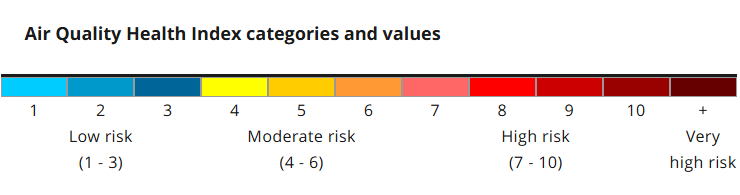
The AQHI communicates the short-term health risk associated with air pollution using a scale from 1 to 10+. The higher the number, the greater the potential health risk.
Adapted from Environment and Climate Change Canada and the Government of Ontario’s AQHI health messaging.
Air Quality Can Change Throughout the Workday
Monitoring the AQHI at the beginning of a shift is a is a great starting point for changing conditions., but it may not tell you what conditions will look like several hours later.
Air pollution can change over time and from one location to another. During wildfire smoke events in particular, conditions can change considerably from hour to hour. Environment and Climate Change Canada continually updates AQHI conditions and forecasts, and air quality alerts may also be issued when pollution levels are high.
4S Insight: Don’t Stop at the Morning Check
For employees working in the field, consider how changes in air quality will be communicated during the various work shifts. Who monitors changing conditions? How will supervisors know if the AQHI rises? How will field crews be notified? Building these responsibilities into your procedures can turn air quality monitoring from a morning check into an ongoing part of seasonal safety planning
Recognizing the Effects of Poor Air Quality
The effects of poor air quality can vary depending on the pollutants present, the level and duration of exposure, the work being performed and individual health factors.
During wildfire smoke events, for example, Health Canada identifies common symptoms that can include:
- Headaches
- Coughing
- Irritation of the eyes, nose, throat or sinuses
- Increased mucus production
- More easily fatigued
- Impaired cognitive abilities
More serious symptoms can include shortness of breath, wheezing, dizziness, severe coughing, chest pain and heart palpitations. Employees experiencing concerning or worsening symptoms should follow their workplace procedures and seek appropriate medical attention.
The Government of Ontario also recommends monitoring for symptoms such as difficulty breathing, coughing and irritated eyes as AQHI levels rise.
Practical Air Quality Tips for Outdoor Work
Check the AQHI
Review the local AQHI and air quality alerts before outdoor work begins. Conditions can change, so continue monitoring when air quality is expected to deteriorate. Check Your Local Air Quality Health Index
Consider the Work Being Performed
Think beyond the AQHI number itself. Consider the duration of the task, how strenuous the work will be and whether employees will be working near local sources of pollution.
Communicate Changing Conditions
Ensure supervisors and field employees know how they will receive updates if air quality changes during their shift.
Pay Attention to Symptoms
Employees should be encouraged to report symptoms or concerns rather than continuing strenuous work when they are feeling unwell.
Adjust Outdoor Activities When Appropriate
As AQHI levels increase, government guidance recommends considering changes to strenuous outdoor activities based on the risk level and whether symptoms are occurring.
Plan Ahead for Poor Air Quality Events
Air quality should be considered alongside other changing environmental conditions. Establishing responsibilities before an event occurs can make it easier to respond when conditions deteriorate.
Air Quality Protection Equipment
When air quality is poor, reducing exposure should be the priority. If outdoor work cannot be avoided, appropriate respiratory protection may provide additional protection from airborne particles.
A properly fitted N95 or equivalent respirator can help filter fine particles, including those found in wildfire smoke. However, respirators have limitations and should be selected and used appropriately for the workplace and hazard.
Whenever possible, workers should also have access to cleaner indoor air during breaks or periods of elevated air pollution.
What About Wildfire Smoke?
Wildfire smoke deserves additional attention because it can cause air quality to deteriorate rapidly.
Smoke contains a mixture of gases and particles, including fine particulate matter (PM₂.₅). Health Canada identifies PM₂.₅ as the main health risk from wildfire smoke. These particles are too small to see with the naked eye, which is one reason visibility and smell alone aren’t reliable ways to determine whether air quality is safe.
During wildfire smoke events, the AQHI can also change rapidly as concentrations of fine particulate matter increase.
Air Quality Myths and Facts
Fact: Air pollution can include gases and fine particles that aren’t always visible or noticeable. During wildfire smoke events, for example, air quality can be poor even when you can’t see or smell smoke. Checking the AQHI is more reliable than relying on appearance alone.
Fact: Outdoor air pollution can come from several sources, including vehicle traffic, industrial activity and wildfire smoke. The AQHI accounts for common pollutants including ground-level ozone, nitrogen dioxide and fine particulate matter (PM₂.₅).
Fact: Air quality can change throughout the day and can vary between locations. During wildfire smoke events, conditions can change considerably from hour to hour, making continued monitoring important when conditions are expected to change.
Fact: Exposure and health effects can vary based on the individual, duration of exposure and physical demands of the work. A worker performing strenuous outdoor work may have different considerations than someone completing a brief outdoor task.
Fact: Monitoring should be proactive. Checking current conditions and forecasts can help supervisors make informed decisions before workers begin experiencing effects.
Building Air Quality Into Your Safety Planning
Air quality may not be something employees can control, but municipalities can control how prepared they are when conditions change.
Consider whether your current procedures clearly address who monitors outdoor air quality, how information reaches field crews, what employees should do if they experience symptoms and how supervisors determine when changes to outdoor work may be appropriate.
The goal isn’t to stop outdoor work every time the AQHI changes. It’s to make sure employees and supervisors have the information they need to make informed decisions as conditions evolve.
4S Insight: Air quality awareness works best when it becomes part of normal work planning.
A clear process for monitoring, communicating and responding to changing conditions can help municipalities move from reacting to poor air quality events to being prepared for them.
What’s Next?
Our Municipal Summer Safety Series is almost complete, with one more seasonal safety topic to explore.
Upcoming Topic
- Tick Awareness & Outdoor Hazards
How Does Your Municipality Compare?
Every municipality faces unique health and safety challenges, but understanding where your program stands is the first step toward continuous improvement.
Our Municipal Safety Questionnaire is designed to help organizations evaluate key areas of their workplace health and safety program, identify opportunities for improvement, and start meaningful conversations about strengthening safety performance.
By completing the questionnaire, you’ll gain insight into areas such as:
- Health and safety program maturity
- Training and competency management
- Documentation and recordkeeping
- Hazard identification and corrective actions
- Workplace inspections and compliance
- Opportunities for continuous improvement
Whether you’re looking to validate your current processes or identify potential gaps, the questionnaire provides a practical starting point.
Supporting Safer Municipal Workplaces
At 4S Consulting, we partner with municipalities to strengthen health and safety programs through consulting, training, and technology solutions. Our team helps organizations improve compliance, reduce risk, support due diligence, and build more consistent safety practices across departments and locations.
Whether your focus is seasonal hazard planning, employee training, program development, documentation, or overall safety performance, we are here to help you move forward with confidence.
Strengthen Your Health & Safety Program with the WSIB Health & Safety Excellence Program
The WSIB Health & Safety Excellence Program (HSEp) is designed to help Ontario employers improve their occupational health and safety management systems through practical topics, continuous improvement, and measurable outcomes. Participating organizations may also be eligible for WSIB rebates for successfully completing approved health and safety topics.
As an approved HSEp service provider, 4S Consulting works alongside municipalities to help:
- Develop and strengthen health and safety management systems
- Meet HSEp program requirements with confidence
- Implement practical health and safety initiatives
- Improve due diligence and workplace safety performance
- Support continuous improvement across departments
Whether you’re just beginning your HSEp journey or advancing your existing program, our team can help guide you every step of the way.